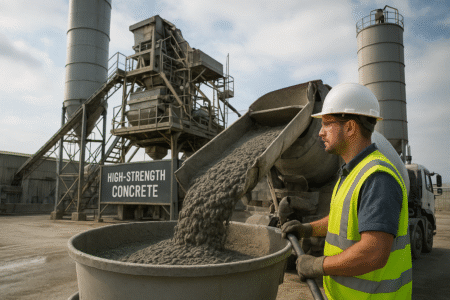
High-strength concrete is produced by a combination of high-quality materials, a very low water-to-cementitious material ratio (typically 0.25-0.35), the use of pozzolanic supplementary cementitious materials (SCMs) like silica fume, fly ash, and slag, the essential addition of superplasticizers to maintain workability, and carefully controlled mixing, compaction, and curing processes. The resulting dense microstructure with reduced porosity and a stronger bond between the cement paste and aggregates is the key to its exceptional strength and durability.
Key Components and Mix Design
- Low Water-to-Cementitious Ratio (w/cm):
This is the most critical factor, achieved by reducing water and using superplasticizers to improve workability without adding more water.
- High-Quality Materials:
High-strength cement, clean and well-graded aggregates, and potable water free from impurities are essential.
- Supplementary Cementitious Materials (SCMs):
Pozzolanic materials such as silica fume, fly ash, and slag significantly contribute to strength by refining the pore structure and forming strong gels.
- Admixtures:
Superplasticizers (high-range water reducers) are vital for reducing water content while ensuring the mix remains workable.
- Aggregates:
The use of smaller-sized coarse aggregates, and in some cases, eliminating them entirely for ultra-high-strength concrete, leads to a more homogeneous mixture and improved packing density.
Production and Curing Process
- Mixing:
A wet mix batch in a high-quality concrete mixer, such as a planetary countercurrent mixer, is preferred to ensure homogeneity and avoid excessive air content.
- Compaction:
High-strength concrete requires proper compaction to eliminate voids and create a defect-free, dense material.
- Curing:
Controlled curing practices, such as prolonged wet curing or the use of curing compounds, are necessary to prevent excessive moisture loss and ensure proper hydration for full strength development.
- Temperature Control:
Maintaining the optimal temperature during mixing and curing is crucial to manage the setting process and hydration rates.
Why It’s Strong
- Dense Microstructure:
The combination of a low w/cm ratio and the use of SCMs creates a dense microstructure with reduced porosity.
- Improved Bonding:
The strong pozzolanic reactions and finer particles lead to enhanced bonding between the cement paste and the aggregates.
- Less Permeability:
The dense structure results in reduced permeability, which increases the concrete’s durability and corrosion resistance.